Introduction
Local SEO services help small businesses appear in relevant online searches when people look for products or services in a particular area. For example, someone in Rewa may search for a nearby restaurant, a web design company, a dentist, or a repair service. Businesses with accurate information and useful websites have a better opportunity to reach these potential customers.
Many small business owners depend on word of mouth and regular customers. These methods remain valuable, but people also use Google to compare local businesses before making a decision. If your business information is incomplete or your website does not explain your services clearly, potential customers may find it difficult to discover you.
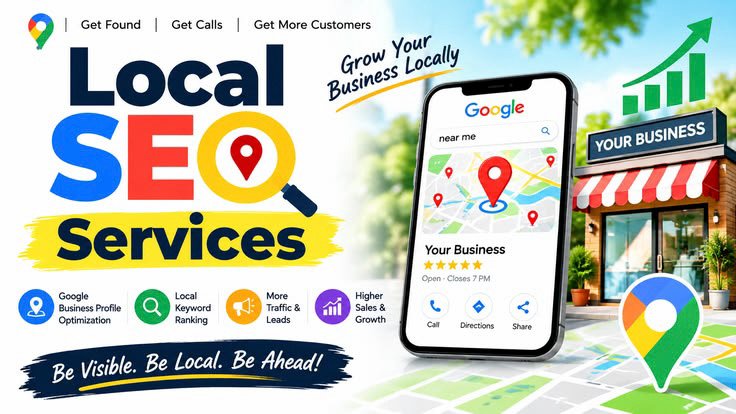
Local search engine optimization focuses on improving your online presence for searches connected to your location and services. It includes business profile optimization, local keyword research, website improvements, customer reviews, and other relevant activities.
For small businesses, the goal is not simply to receive more website visits. It is to help the right people find accurate information and understand why your business may meet their needs.
Table of Contents
1. What Are Local SEO Services?
2. Why Small Businesses Need Local SEO
3. What Do Local SEO Services Include?
4. How to Improve Local Search Visibility
5. Common Local SEO Mistakes
6. How to Measure Local SEO Performance
7. How to Choose a Local SEO Service Provider
8. Frequently Asked Questions
9. Conclusion
1.What Are Local SEO Services?
Local SEO services are activities that help a business improve its visibility in search results related to a particular location.
For example, a restaurant in Rewa may want to reach people searching for restaurants in Rewa. A plumber may want to connect with customers searching for plumbing services in the areas they actually serve.
Local SEO helps businesses make their location, services, contact details, and website content easier for search engines and potential customers to understand.
These activities can include improving a Google Business Profile, researching location based keywords, creating useful service pages, managing business information, and monitoring search performance.
However, local SEO does not guarantee a top position in Google. Search results depend on several factors, including the relevance of the business to a search, its distance from the searcher, and its prominence.
2.Why Small Businesses Need Local SEO Services
Reach People Searching for Nearby Businesses
People often search online when they need something specific. They may search for a nearby bakery, a website developer, or a local electrician.
When your business has accurate information and a relevant online presence, potential customers have a better chance of discovering it.
For example, a website development business in Rewa can create a service page explaining its website design services, the types of websites it builds, and the locations it serves. This gives visitors useful information and helps search engines understand the page.
Build Trust Before the First Contact
Customers usually want to know whether a business is genuine before calling or visiting.
A complete business profile, a professional website, accurate contact information, and honest customer reviews can help people make an informed decision.
Keep your business hours updated and make sure your phone number works. Small details can influence whether someone contacts you or chooses another provider.
Compete With Larger Businesses
A small business does not always need a large marketing budget to improve its online presence.
It can start with practical steps, such as correcting business details, improving existing service pages, and publishing helpful information for its local audience.
Results depend on competition and other factors, but consistent improvements can create a stronger foundation for long term visibility.
3. What Do Local SEO Services Include?
1. Google Business Profile Optimization
A Google Business Profile helps eligible businesses manage how their information appears across Google Search and Google Maps.
Useful profile information includes the business name, address when applicable, phone number, opening hours, category, services, and photographs.
To improve your profile:
1. Enter accurate business information.
2. Choose the most relevant primary business category.
3. Add appropriate secondary categories when they genuinely apply.
4. Describe your services clearly.
5. Keep opening hours updated.
6. Add genuine photographs of your business or work.
7. Respond professionally to customer reviews.
Do not add unnecessary keywords to your business name. Use the real name of your business and follow Google’s guidelines.
2. Local Keyword Research
Keyword research helps you understand the words people use when searching for local products and services.
For example, a website development company might research phrases such as website development services in Rewa or website designer in Rewa.
Choose keywords that match your actual services and the needs of your customers. Search volume alone should not decide which keywords you target.
A practical starting point is to list your main services, identify the locations you serve, and research relevant search phrases. Then use suitable phrases naturally in page titles, headings, and website content.
Avoid creating many nearly identical pages that simply replace one city name with another. Each location page should provide genuinely useful and accurate information.
3. Website and On Page SEO
Your website should make it easy for visitors to understand what you offer and how to contact you.
Important on page improvements include:
1. Clear page titles and meta descriptions.
2. Helpful headings that describe each section.
3. Relevant service information.
4. Mobile friendly page layouts.
5. Descriptive image alt text.
6. Simple navigation.
7. Working contact forms and phone links.
For example, a service page titled “Website Development Services in Rewa” gives visitors a clearer idea of the page than a vague heading such as “Our Work”.
Use local keywords naturally. The page should answer customer questions rather than repeat the same phrase unnecessarily.
4. Local Citations and Business Information
Business citations are online mentions of important business details, such as its name, address, phone number, and website.
Relevant directories and professional listings may help customers discover a business. Accurate information also makes it easier for people to contact the right company.
Start by checking existing listings. Correct outdated phone numbers, old addresses, and duplicate profiles where possible.
Choose directories that are relevant and trustworthy. Submitting your business to every directory available is not a substitute for quality and accuracy.
5. Reviews and Customer Reputation
Customer reviews can help potential buyers understand other people’s experiences with a business.
Ask genuine customers to share honest feedback without offering rewards in exchange for positive reviews. Never purchase fake reviews or ask people to describe experiences they did not have.
Respond politely to positive and negative feedback. If a customer raises a genuine concern, acknowledge it and explain how you intend to address the issue when appropriate.
Reviews are useful for building customer confidence, but they do not guarantee higher rankings or more sales.
4. How to Improve Local Search Visibility
Small businesses can begin with a simple, consistent plan.
Step 1: Complete Your Business Information
Check your business profile, website, phone number, opening hours, and service details. Correct inaccurate information before moving to more advanced activities.
Step 2: Improve Important Service Pages
Review your main service pages and make sure each one explains what you offer, who it helps, and how customers can contact you.
Add location information where it is relevant and accurate. Avoid mentioning places your business does not serve.
Step 3: Publish Useful Local Content
Create content that answers real questions from your target customers.
For example, a web development company could publish a guide explaining how local shops can choose a business website. A restaurant might provide clear information about its menu, location, and opening hours.
Useful content gives visitors a reason to explore your website and understand your services.
Step 4: Check Mobile Experience
Many people search for local businesses using their phones. Your website should load reliably, display text clearly, and make important information easy to find.
Test your contact buttons, forms, menus, and phone links on a mobile device.
Step 5: Monitor and Improve
Review your search performance regularly. Identify pages that receive relevant impressions but few clicks, and check whether their titles and descriptions accurately explain the content.
Use the findings to improve your website instead of changing everything at once.
5. Common Local SEO Mistakes
Small businesses can waste time and money when they focus on the wrong activities.
Keyword stuffing: Repeating a phrase too many times makes content difficult to read. Write naturally and focus on the customer’s question.
Incorrect business information: Old phone numbers or inconsistent opening hours can confuse potential customers.
Fake reviews: Purchased or misleading reviews damage trust and may violate platform policies.
Ignoring mobile users: A website that is difficult to use on a phone can discourage potential customers from contacting you.
Creating thin location pages: Pages with almost identical content and only a changed city name offer little value.
Expecting instant results: Local SEO takes time, and the amount of progress varies by business and market. Avoid providers who promise guaranteed rankings.
The best approach is to correct the basics first, then improve your website and local content based on real customer needs.
6. How to Measure Local SEO Performance
You should measure whether your local SEO work is helping your business reach relevant people.
Useful measurements include:
Search impressions: How often your website appears in Google Search results.
Organic clicks: How many people visit your website through unpaid search results.
Search queries: The phrases people use to discover your website.
Business profile interactions: Available data may include calls, website clicks, and requests for directions, depending on Google’s reporting.
Enquiries and conversions: Calls, form submissions, appointment requests, and other meaningful actions.
Google Search Console can help you understand how your website performs in Google Search. Your Google Business Profile can provide additional information about how customers interact with your profile.
Keep a record of your starting performance and review changes over time. An increase in traffic is not automatically an increase in customers, so connect your SEO measurements with real business enquiries whenever possible.
7. How to Choose Local SEO Services for Small Businesses
Before hiring a provider, ask what work will actually be completed.
A reliable provider should explain the proposed activities, reporting process, expected limitations, and costs in understandable language.
Consider these questions:
1. Will they review your website and existing business profile?
2. Will they research keywords relevant to your services and location?
3. Will they explain which website improvements are necessary?
4. Will they follow Google’s guidelines?
5. Will they provide clear reports about completed work and performance?
6. Will they explain what is included in the price?
7. Do they avoid guarantees of rankings or sales?
Be careful with providers who promise instant results or refuse to explain their methods.
Local SEO should support your actual business goals. The right approach depends on your location, competition, website condition, services, and budget.
8. Frequently Asked Questions
1. What are local SEO services?
Local SEO services help businesses improve their online visibility for relevant searches connected to their location. They may include business profile optimization, local keyword research, website improvements, and review management.
2. Are local SEO services useful for small businesses?
Yes. They can help small businesses present accurate information online and become easier to discover through relevant local searches. Results vary depending on competition, location, and the quality of the work.
3. How long does local SEO take to show results?
There is no fixed timeline. Some improvements may be visible sooner than others, while meaningful progress can take several months. The timeframe depends on the business, competition, website condition, and activities completed.
4. Does every small business need a website for local SEO?
Not every business needs a website to maintain a Google Business Profile. However, a useful website can provide more detailed service information, answer customer questions, and support a broader search strategy.
5. What is the difference between local SEO and regular SEO?
Regular SEO focuses on improving visibility in relevant organic search results more broadly. Local SEO gives additional attention to location related searches, local business information, and visibility in relevant local results.
6. Can local SEO guarantee first page rankings?
No trustworthy provider can guarantee a particular Google ranking. Search results change based on several factors, and businesses should evaluate progress through relevant visibility, website activity, and customer enquiries.
7. How much do local SEO services cost?
Costs vary according to the provider, business location, competition, website condition, and amount of work required. Ask for a clear scope of work and pricing before committing to a service.
9. Conclusion
Local SEO services can help small businesses improve their online presence, provide accurate information, and reach people searching for relevant products or services nearby.
The process starts with simple but important steps: complete your business profile, research relevant local keywords, improve your service pages, maintain accurate business details, and build trust through genuine customer feedback.
Regular monitoring helps you understand which activities are useful and where improvements are needed. Focus on providing real value to customers instead of chasing quick rankings or repeating keywords.
A clear, consistent approach gives your business a stronger foundation for long term local visibility.
Call to Action
If you want to improve your business’s online presence, Promize can help you understand local SEO, website optimization, keyword research, and related digital marketing options.
Start by reviewing your current website and business profile. Identify the most important gaps, then build a practical plan around your business goals and budget.