Introduction
Your website is often the first place potential customers visit when they want to learn about your business. Before contacting you, they may check your services, compare your offerings, and decide whether your company looks trustworthy. A confusing or outdated website can make that decision difficult.
This is where custom website development services can help. Instead of choosing a design that looks like hundreds of other websites, you can build a website around your brand identity, business goals, and customer needs.
For example, a local clothing store may need product categories and online ordering, while a consulting business may need service pages, enquiry forms, and appointment booking. Both businesses need websites, but their requirements are different.
A well planned website considers these differences from the beginning. It gives visitors a clearer experience and provides a practical foundation for future business growth.
Table of Contents
1. What Are Custom Website Development Services?
2. Why Custom Website Development Matters for Brand Growth
3. Important Features of a Business Website
4. Custom Website Development vs Template Based Websites
5. Common Website Development Mistakes
6. How to Choose the Right Website Development Partner
7. Frequently Asked Questions
8. Conclusion
1. What Are Custom Website Development Services?
Custom website development services involve planning, designing, and building a website around a business’s specific requirements. The aim is to create a website that supports the company’s identity, services, customers, and long term goals.
Depending on the project, development may include custom layouts, responsive design, website forms, product pages, booking features, payment integration, and connections with marketing tools.
How Custom Development Works
The process usually begins with understanding the business.
A website developer identifies the target audience, main services, competitors, and actions visitors should take. These details help determine the website structure and functionality.
For instance, a school website may need admission information, academic details, faculty profiles, and enquiry forms. An ecommerce website may require product filters, payment options, shipping information, and order management.
The design and development process should reflect these practical needs rather than adding features simply because they look impressive.
2. Why Custom Website Development Matters for Brand Growth
A business website should do more than display information. It should communicate what makes the business different and help visitors understand what to do next.
1. Build a Recognisable Brand Identity
Your website’s colours, typography, images, content, and layout influence how visitors perceive your business.
A professional services company may prefer a clean design with clear service descriptions. A creative brand may need a more visual layout to showcase its work.
Custom website planning helps maintain consistency between your website, social media profiles, advertising campaigns, and other brand materials.
2. Improve the User Experience
Visitors should be able to find important information without unnecessary effort.
Clear navigation, readable text, relevant images, and well placed buttons make a website easier to use. Mobile responsiveness is equally important because many visitors browse websites on smartphones.
For example, a visitor looking for a restaurant’s menu should not have to search through several unrelated pages. A direct menu link, opening hours, location details, and reservation information create a more useful experience.
3. Support SEO and Digital Marketing
A properly developed website can provide a stronger foundation for search engine optimisation.
Useful elements include descriptive page titles, logical headings, clean URLs, mobile friendly layouts, appropriate image descriptions, and good page performance.
However, website development alone does not guarantee high Google rankings. Results also depend on content quality, competition, search intent, website authority, and ongoing SEO work.
For businesses running Google Ads or Meta Ads, dedicated landing pages can also help visitors move from an advertisement to a relevant service or product.
3. Important Features of a Business Website
Effective business website development starts with choosing features that solve real customer problems.
Responsive Design
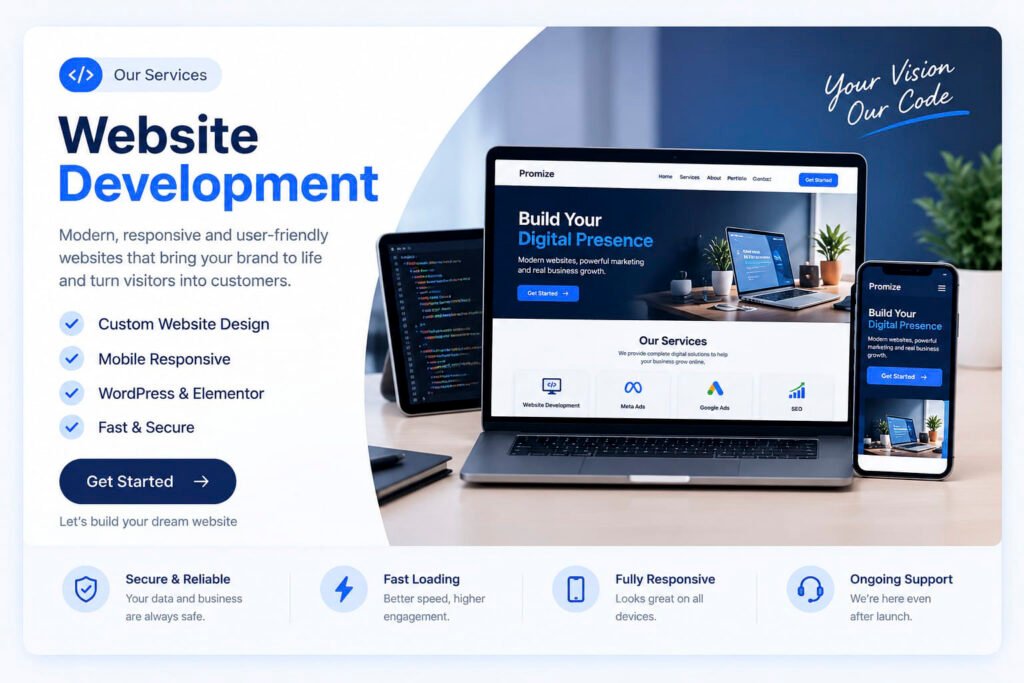
Your website should adapt to mobile phones, tablets, and desktop screens. Visitors should be able to read content, use forms, and navigate pages without excessive zooming or horizontal scrolling.
Fast Loading Pages
Slow pages can frustrate visitors. Optimised images, suitable hosting, efficient code, and careful use of plugins can help improve loading performance.
Test the website on real mobile devices as well as desktop computers before publishing it.
Clear Calls to Action
Each important page should guide visitors towards a relevant next step.
Examples include requesting a quotation, booking an appointment, viewing a portfolio, or contacting the business through WhatsApp.
The action should match the page’s purpose. A service page may encourage visitors to request a consultation, while a portfolio page may invite them to discuss a similar project.
Security and Easy Maintenance
SSL protection, regular backups, software updates, secure login practices, and reliable hosting help protect a website.
Before development begins, clarify who will manage updates, renew hosting, maintain the domain, and resolve technical issues.
4. Custom Website Development vs Template Based Websites
Both custom development and template based websites can be suitable. The right choice depends on your budget, timeline, design needs, and functionality requirements.
A template based website can be a sensible starting point for a small business that needs a professional online presence quickly. Platforms such as WordPress with Elementor allow businesses to create and manage pages without building everything from scratch.
Custom development may be more suitable when the business needs specialised functionality, a distinctive user experience, or a website structure that standard templates cannot support easily.
Consider a growing clothing business. It might start with a standard ecommerce design and later require advanced product filtering, customer accounts, or integrations with inventory software.
The important decision is not whether custom development is always better. It is whether the selected approach meets the business’s actual needs without creating unnecessary costs or complexity.
5. Common Website Development Mistakes
Even an attractive website can perform poorly when important details are overlooked.
Ignoring mobile users: A layout that works on a computer may be difficult to use on a phone. Test buttons, menus, forms, and text on different screen sizes.
Writing unclear content: Visitors should quickly understand what the business offers, who it serves, and how to make an enquiry.
Adding unnecessary features: Too many animations, plugins, or complicated elements can affect usability and maintenance. Prioritise features that serve a clear purpose.
Forgetting SEO basics: Missing page titles, duplicate content, broken links, and poor internal linking can make a website harder to navigate and understand.
Not measuring performance: Track useful actions such as form submissions, calls, purchases, and qualified enquiries. These measurements help identify which pages need improvement.
6. How to Choose the Right Website Development Partner
Before hiring a website developer or agency, review more than the design of its own website.
Start by checking relevant portfolio examples. Look for websites similar to your business requirements, and verify that the examples represent genuine work.
Ask for a clear project scope that explains the number of pages, included features, expected timeline, payment terms, and any additional costs.
You should also clarify website ownership. Make sure you understand who controls the domain, hosting account, website administrator access, and important business data.
Finally, discuss support after launch. A website needs occasional updates, security checks, content improvements, and performance monitoring.
At Promize, our approach to website development focuses on understanding business requirements, planning useful website structures, and supporting a clear user experience. The appropriate solution depends on each business’s goals, budget, and technical needs.
7. Frequently Asked Questions
1. What are custom website development services?
Custom website development services involve planning and building a website according to a business’s specific goals, branding, audience, and functional requirements.
2. How much do custom website development services cost?
The cost depends on the number of pages, design complexity, required functionality, integrations, content requirements, and maintenance arrangements. Request a detailed quotation before starting the project.
3. How long does it take to develop a custom business website?
A simple business website may take a few weeks, while larger projects with ecommerce features or specialised integrations may take longer. The timeline depends on the scope, content readiness, feedback, and testing requirements.
4. Are custom websites better for SEO?
A well planned custom website can support SEO through logical structure, mobile responsiveness, clean URLs, and good performance. However, rankings also depend on content, competition, relevance, authority, and ongoing optimisation.
5. Can a small business use WordPress for website development?
Yes. WordPress can be a practical option for many small businesses. With suitable themes, plugins, and tools such as Elementor, businesses can create service websites, portfolios, blogs, and ecommerce stores.
6. What should I check before hiring a website developer?
Review relevant work, discuss your requirements, confirm pricing and timelines, clarify ownership and access, and ask about maintenance and support after launch.
7. Can a business website help generate more enquiries?
Yes, a useful website can make it easier for potential customers to understand your services and contact you. However, enquiries depend on factors such as traffic quality, offer relevance, website usability, pricing, and customer demand.
8. Conclusion
Custom website development services can help businesses create a website that reflects their identity, communicates their value, and supports their marketing goals. The right approach begins with understanding customers and choosing features that solve genuine problems.
Whether you need a business website, ecommerce store, portfolio, or service website, focus on responsive design, clear content, useful functionality, security, and easy maintenance.
A website does not need unnecessary complexity to be effective. It needs to serve its audience well and make the next step clear.
Call to Action
Planning a website for your business? Promize can help you explore suitable website development options based on your goals, required features, and budget. Discuss your requirements before deciding which solution is right for you.